
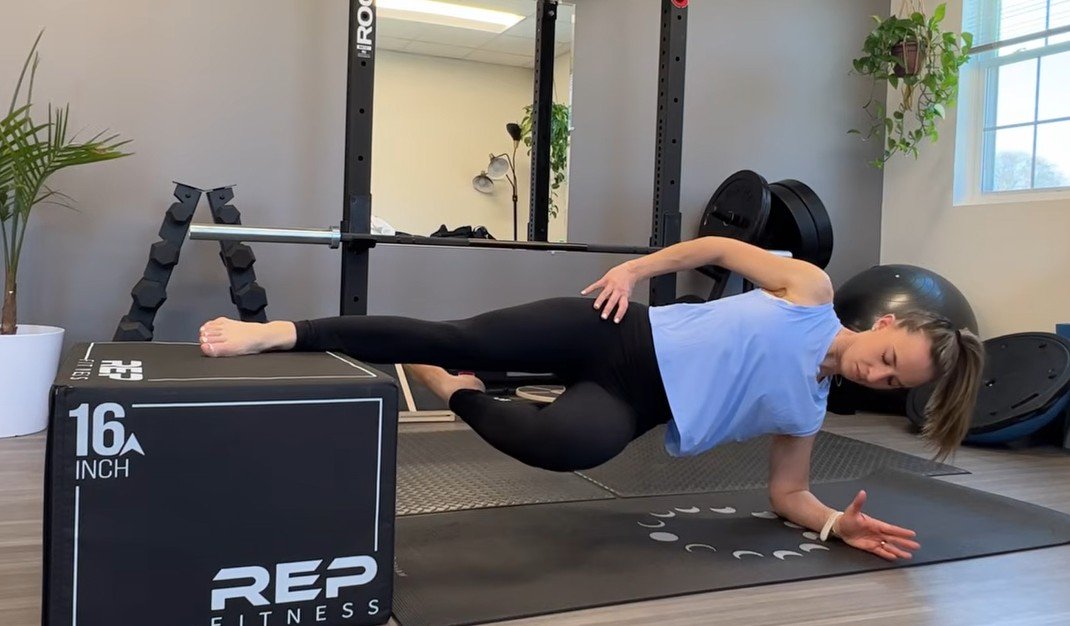
The Copenhagen Plank is everywhere right now — and your hips will thank you.
If your workouts still skip the inner thighs and hip adductors, you’re missing some of the most important muscles for keeping your knees, hips, and lower back happy.
Those little stabilizers don’t get much love in regular planks or squats, but they quietly hold everything together when you’re walking, running, or just standing around.
Enter the Copenhagen plank. It’s a side-plank variation that’s been popping up all over fitness feeds lately, and for good reason.
Physical therapists love it.
Athletes swear by it.
And the best part?
It takes less than a minute and you can do it almost anywhere.
Stop ignoring your inner thighs! Here’s why the Copenhagen plank is the one move you need for bulletproof hips and knees. 👇
What it actually is
You set up like a regular side plank, but instead of stacking both feet on the floor, you rest the top leg on a bench, chair, or sturdy coffee table. Then you lift your bottom leg so it’s hovering, or lightly touching the floor if you need a little help. The whole body forms a straight line from head to heel of the top foot. Hold it. Feel the burn on the inner thigh of that top leg. That’s your adductors working overtime.
It’s deceptively simple. Most people underestimate how hard those muscles have to work until the first 20 seconds hit.
Why it matters
Stronger adductors mean better hip stability. Better hip stability means fewer weird knee aches, less lower-back tightness, and more control when you change direction or land from a jump. It’s the kind of move that doesn’t make you look super strong in the gym but makes everything else feel smoother.
A lot of people notice the difference in daily life first — walking up stairs without that little hip pinch, or getting out of a low chair without compensating. Over time it also helps protect the knees during running or heavier lifting.
How to add it to your routine
Pair it with any of the bodyweight workouts you’ve already been doing. After your 30-minute session (women’s or men’s version), just drop in three rounds of Copenhagen planks on each side. Start with 20–30 seconds per side if you’re new to it. Build up as it gets easier.
Quick form tips:
- Keep your hips stacked — don’t let the top hip roll forward or back.
- Squeeze the glute of the top leg a little to keep everything stable.
- If the full version feels too intense, put the bottom foot lightly on the floor for support (that’s the modified version most people start with).
- Breathe. The urge to hold your breath is strong, but steady breathing keeps the core working properly.
You can do these on a park bench, the edge of your couch, or even a solid dining chair. No fancy equipment required.
That’s it. One quiet little move that fills a gap most workouts leave wide open. Your hips (and knees, and lower back) will notice the difference faster than you think.
Give it a try at the end of your next bodyweight session and see how it feels.
Leave a Reply